



Мы продолжаем напряженно работать, чтобы улучшить наш сайт и перевести его на другие языки. Русская версия этой страницы еще не совсем готова. Поэтому мы представляем здесь пока английскую версию. Мы благодарим вас за понимание.
Другие библейские персонажи
Bar-Rabban
According to Bulgakov's Pilate, Bar-Rabban had allowed himself to call directly for rebellion, and he had also killed a guard during the attempt to arrest him. Consequently, according to the procurator, Bar-Rabban is incomparably more dangerous than Ha-Nozri.
Bar-Rabban comes from the Aramaic Bar-abbâ, it means son of the father. If he existed historically, he would probably have been a member of the sicarii, a militant jewish liberation movement which wanted to drive away the Roman oppressors from Judea by force.
In the Matthew gospel is said that Barabbas' first name was Jesus. Mattheus 27:16 - At that time they were holding a notorious prisoner, called Jesus Barabbas. This has led to a theory that the people, in fact, wanted to set free Jesus of Nazareth. In Jewish prayers God was often addressed to as Abba, and Bar-abbâ would thus mean son of God. Advocates of this theory suppose that the Jewish crowd at Pilate's palace asked for the liberation of Jesus, the son of God. According to this theory, anti-Semitic christians would have re-written the story in such way that the Jewish were to blame for Christ's crucifixion, by letting them plead for the liberation of a murderer.
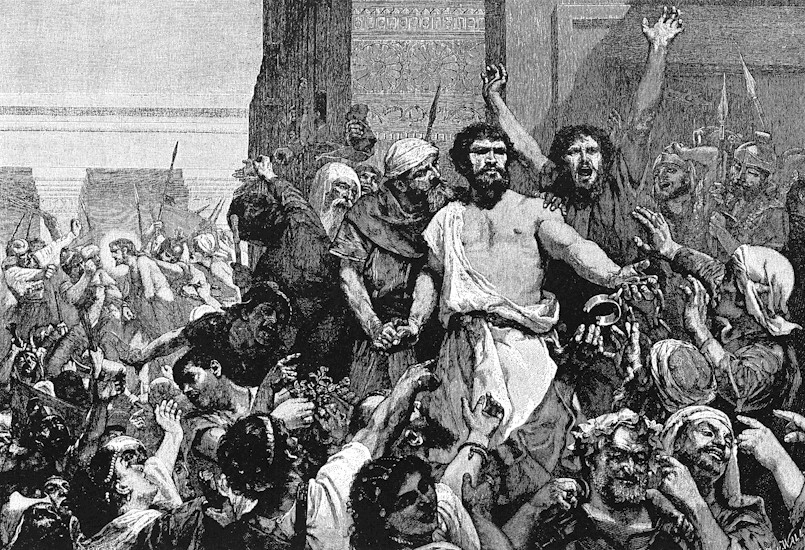
Дайте нам Варавву! Американский школьный плакат 1910 г.
Niza
In chapter 26, in the night of Yeshua Ha-Nozri's burial, Aphranius goes to a carpet shop in the Greek street and goes to the small square courtyard. «Niza!» he called softly, and a young woman without a veil appeared on the terrace. «Are you alone?», he asked softly in Greek. «Yes,» the woman on the terrace whispered, «my husband left for Caesarea in the morning. But the serving-woman is at home».
They spent very little time together, certainly no more than five minutes, and we don't know what's been said. After Aphranius has left, Niza hurries to the Lower City. There she meets a handsome young man who's leaving the palace of the high priest Kaifa. It's Judas of Kiriath. She doesn't want to tell him where she's going to, which disappoints him: «But why?... We had it all arranged... I wanted to come to you, you said you'd be home all evening...» «Go to the olive estate», Niza whispers, «I'll go ahead». But when Judas arrives at the meeting place, instead of Niza, two men with a knife and one with a hood are waiting for him. The first two kill him. The third one rides back to the palace of Herod the Great...
Niza is portrayed in a a shroud of mystery. Is she a double agent? She presumably is. She is, for sure, Judas' mistress, and maybe Aphranius' mistress as well. Probably, who knows? Anyway, it was not just for the money that Judas was prepared to help to frame Yeshua...
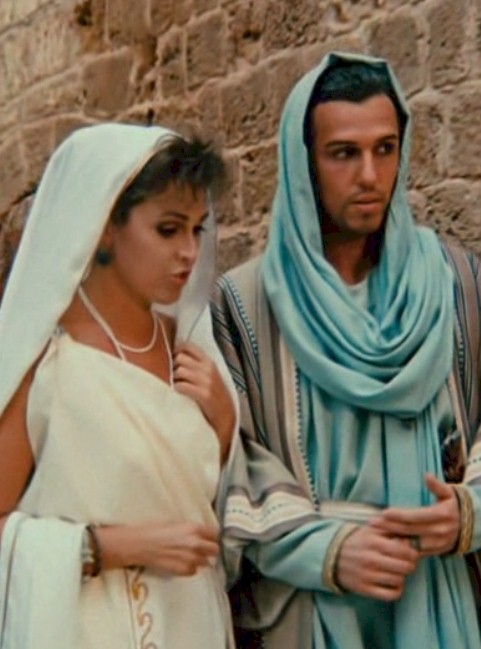
Игорь Верник (Иегуда) и Ирина Кара (Низа) в фильме Юрия Кары (1994)
Pilate's wife
As for Pilate's wife: only Matthew mentions her. The other three evangelists remain silent about her. Matthew 27:19 describes how Pilate's wife sent her servant Miriam to him to ask him to save Jesus, for she had dreamed about it. But her name is not mentioned. As is so often the case with stories, much more was learned about her in the many centuries that followed.
From the 4th century onwards, Pilate's spouse is given a name: Claudia Procula. According to Christian tradition, after Pilate's death, she would become a prominent figure among those dedicated to spreading the «Good News». In medieval stories, and certainly in the passion plays that stemmed from them, she is given a distinct role. In almost all the countless and world-famous Passion processions held every year in Spain during Semana Santa or the Holy Week, a statue of Claudia Procula is carried, often crafted by a well-known sculptor such as the one of, for example, Antonio Castillo Lastrucci (1882-1967) in the Hermandad de la Macarena or the Brotherhood of the Macarena of Seville
In the final version of Bulgakov's The Master and Margarita, Pilate's wife is not mentioned, but in earlier versions, such as The Engineer's Hoof (*) in 1929, Bulgakov paid more attention to Claudia Procula, and he would even suggest in no uncertain terms that she was having an amorous affair with Pilate's secretary.
In that version, during his interrogation of Yeshua, Pilate was visited by an aide who conveyed a message from Claudia Procula. She begged her husband to spare Yeshua's life. Pilate replied by saying that the prisoner would be treated strictly according to the law, but he could not resist subtly letting his secretary know that he was aware of the fact that he was having an affair with Claudia Procula: «[...] after he had thus rewarded the adjutant, Pilate did not forget the secretary. He turned to him and bared his yellowed teeth as wide as possible: ‘Forgive me for speaking of a lady in this way in your presence.’ The secretary turned pale and his feet grew cold.»
In The Golden Spear, a version written in 1936, the author is even more explicit: «'My secretary’s head smells of oil,' thought the procurator. 'I am astonished that my wife can tolerate such a vulgar lover... My wife is a fool».
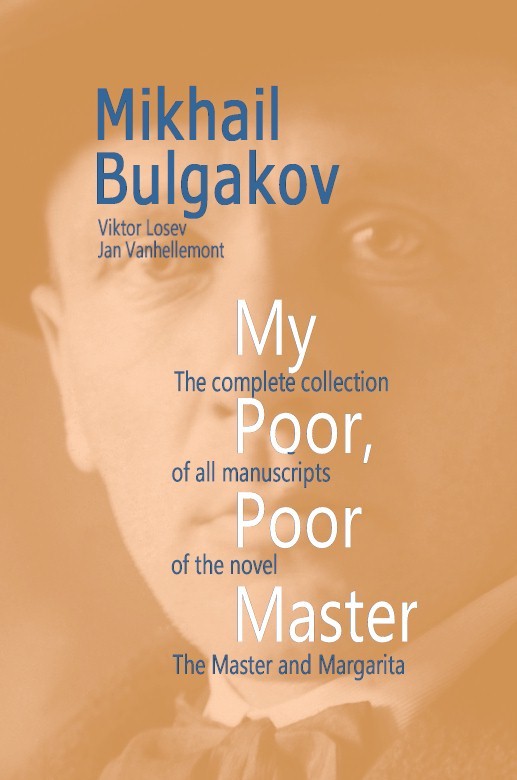
(*) Your webmaster translated The Engineer's Hoof and all other surviving manuscripts of the early versions of The Master and Margarita into English under the title My Poor, Poor Master. Click on the image at the bottom right of this page for more information about this unique book.of 794-pages.
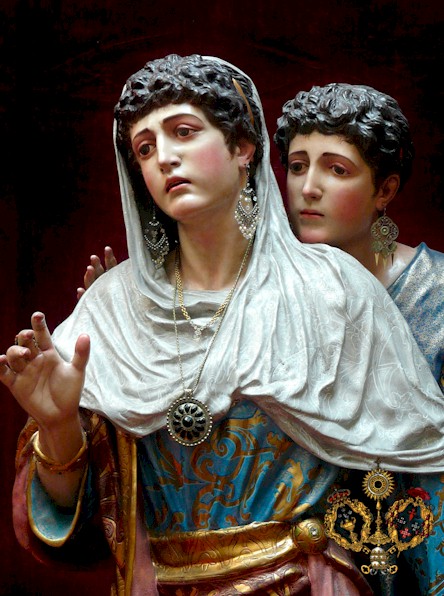
Скульптура Клаудии Прокулы и Мириам Антонио Кастильо Ластруччи
Ratslayer
Mark, nicknamed Ratslayer is the centurion of the first century. A head taller than the tallest soldier of the legion and so broad in the shoulders that he completely blocked out the still-low sun. His face was disfigured because his nose had once been smashed by a blow from a Germanic club in the battle of Isdistavizo in the Valley of the Virgins. When he takes a prisoner apart the latter becomes very obedient and says: «I understand. Don't beat me». According to Yeshua he's a good man who has become cruel and hard since the good people disfigured him. «If I could speak with him, I'm sure he'd change sharply», he says.
On Bald Mountain Ratslayer is leading the soldiers who are supposed to preserve order during the execution. He's not playing an important role there. But he's always around when Pilate needs him, one word is enough to make him coming. One gesture makes him disappear again. He expresses himself barely, but he's capable to accomplish his mission for as long as it needs, indefatigable and under the most difficult conditions.
Bulgakov calls him Марк Крысобой [Mark Krisovoy]. крыса [krysa] is rat and бой [boy] means fight. In the English translations he's called Muribellum (Glenny, 1967) or Ratslayer (Pevear and Volokhonsky, 1997). Muribellum means Mousefighter. It was a Roman nickname for fearful and pusillanimous soldiers. Muribellum is meant ironically, because Mark Ratslayer was not a coward at all.
English subtitles
All films based on The Master and Margarita have been subtitled by your webmaster in English, French, Dutch, German, Spanish and Italian. Click on the link belw to find them.

My Poor, Poor Master